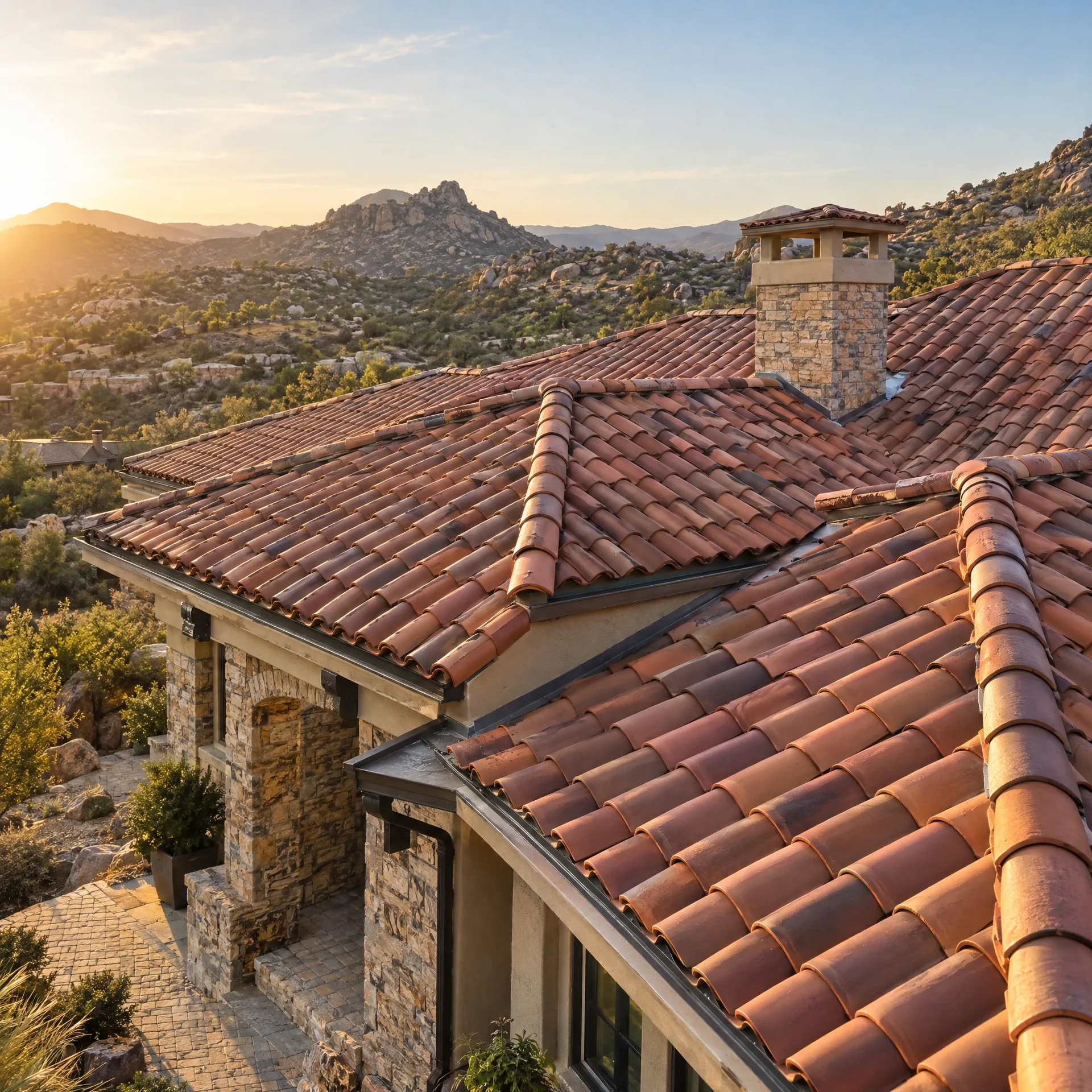
Tile Roofing Chino Valley & Prescott, AZ — Clay, Concrete & Underlayment

Tile roofing services in this area connect homeowners with independent licensed contractors who repair, reset, and replace clay and concrete tile systems. One call covers cracked and slipped tiles, underlayment replacement, and full re-roofs across Chino Valley, Prescott, and greater Yavapai County — where tile roofs define the region's homes and their hidden underlayment is what actually keeps the water out. Providing roofing services throughout Chino Valley and nearby areas of Yavapai County.

Home » Tile Roofing

Why do tile roofs need a specialist's approach?

A tile roof is really two systems. The clay or concrete tiles are the durable outer shell that can last 50 to 100 years, while the underlayment beneath them is the actual waterproof barrier — and that layer fails decades sooner in Arizona’s heat.

This is why most tile roofs leak while the tiles still look perfect. Experienced professionals know to look beneath the surface, using soft-walk techniques to protect the tiles while assessing the felt or synthetic underlayment that is doing the real work.

From a cracked-tile repair to a full leak repair or a lift-and-reset underlayment replacement, tile work rewards a contractor who understands the system. Verify any Arizona contractor’s license and bond at roc.az.gov before work begins.

Tile Roofing Consultations

Seeing a stain, a slipped tile, or a roof approaching 20 years old? The call line connects you with an independent local contractor who works with clay and concrete tile systems across the Quad-City area.

Professional Roofing Solutions
0

What conditions shape tile roofing in Chino Valley?

Tile itself shrugs off the high-desert sun, but the system around it is tested constantly. UV bakes the underlayment brittle, monsoon rain drives water under the tiles, thermal cycling cracks mortar and loosens fasteners, and foot traffic breaks tiles. The tile lasts — the details underneath are what need attention.

Underlayment Aging

The felt or synthetic barrier beneath the tiles dries and cracks under decades of trapped desert heat. Consequently, water finds its way through long before the tiles themselves ever fail.

Wind-Driven Rain

Monsoon microbursts force rain sideways beneath tile courses and under-lap joints. Consequently, the secondary water barrier and its flashing details are what actually keep the interior dry during a storm.

Cracked & Slipped Tiles

Thermal cycling, settling, and foot traffic crack tiles and loosen fasteners, letting tiles slip out of course. Additionally, a single broken tile exposes the underlayment to concentrated sun and water.

Mortar & Fastener Wear

Ridge and hip mortar erodes and fasteners fatigue with every temperature swing. Additionally, failed mortar joints let ridge caps shift and open the roof's most exposed lines to leaks.

How does timely tile roof care save money?

Independent professionals treat the tile and the underlayment separately. Because durable tiles can be lifted, set aside, and reused, replacing an aging underlayment costs far less than a full new roof — and catching cracked tiles early keeps a small repair from becoming a saturated deck and a structural bill.

Professional Roofing Solutions
0

The value of tile is that it can be maintained rather than replaced. A tile roof whose underlayment is reset every few decades can protect a home for a century, where a neglected one rots the decking beneath. The fairest way to think about tile is as a long-term system with a serviceable waterproof layer, not a disposable roof.

Tile work is as much about what is under the tiles as the tiles themselves. Every repair is chosen to protect the underlayment and the deck, and a full roof inspection checks the barrier, flashing, and fasteners that determine whether a tile roof stays watertight.

Cracked Tile Replacement

Local professionals replace cracked, chipped, and slipped clay and concrete tiles with matched pieces, resecuring each to course. Catching a broken tile early keeps the underlayment beneath it protected from sun and water.

Underlayment Lift & Reset

The durable tiles are carefully lifted and stacked, the aged felt is replaced with modern high-temperature synthetic underlayment, and the same tiles are reset — a full waterproof renewal without buying new tile.

Ridge, Hip & Flashing Repair

Eroded mortar is rebuilt, ridge and hip caps are re-secured, and flashing at valleys, walls, and penetrations is renewed — restoring the exposed lines where tile roofs most often begin to leak.

The tile roofing services available in this area

Finding a contractor who genuinely understands tile matters, because tile punishes anyone who treats it like shingle. Independent local professionals cover the full range of clay and concrete work — spot repairs, lift-and-reset underlayment replacement, ridge and flashing restoration, and full re-roofs — matched to the roof and budget. Consequently, one call routes the project to a professional who works with tile systems every week.

Tile Roof Repair

Local professionals repair the everyday failures that let tile roofs leak — cracked and slipped tiles, eroded ridge mortar, and worn flashing at valleys and penetrations. The work starts with a soft-walk inspection that protects the brittle tiles while finding the true source of a leak, which on a tile roof is rarely directly above the interior stain. Broken tiles are replaced with matched pieces and re-secured to course, ridge and hip caps are re-mortared and fastened, and flashing details are rebuilt to spec. Catching these failures early protects the underlayment and the deck beneath, keeping a modest repair from becoming a saturated, structural problem across the roof.

Underlayment Replacement (Lift & Reset)

Local technicians perform the lift-and-reset that renews a tile roof without the cost of new tile. When the underlayment reaches the end of its life — usually decades before the tiles do — the durable clay or concrete tiles are carefully lifted, numbered, and stacked, and the brittle felt paper beneath is stripped away. Modern high-temperature synthetic underlayment is installed over a sound deck, flashing and valley metal are renewed, and the original tiles are reset to course. The result is a fully waterproof roof with its most expensive component — the tile — reused, extending the life of the system by another few decades at a fraction of full-replacement cost.

Clay Tile Roofing

Roofing technicians install and restore genuine clay tile — the classic Southwestern roof, prized for color that never fades because it is fired into the tile itself. Clay handles the high-desert UV better than almost any material and can last a century on the roof, which is why so many Prescott and Chino Valley homes wear it. To ensure durability, tiles are set over high-temperature underlayment with proper batten or mortar systems, headlap and side-lap are held to spec for the roof pitch, and ridge and eave details are closed against wind-driven rain. Clay carries more weight than concrete, so a structural check confirms the framing before installation on any re-roof.

Concrete Tile Roofing

Concrete tile services cover the durable, cost-effective alternative to clay that suits a huge share of Arizona homes. Concrete costs less per square than clay and comes in more profiles and colors, though its surface color is applied and can weather over decades where clay's is permanent. It is heavy and impact-resistant, standing up to hail and debris on exposed rooflines. Tiles are installed over high-temperature underlayment with correct fastening and lap, and a reflective or lighter color helps cut cooling load in the desert sun. Concrete's strength-to-cost ratio makes it the practical choice for most tile re-roofs, and its tiles lift and reset for underlayment renewal just like clay.

Tile Roof Inspection

Local professionals provide the soft-walk inspection that a tile roof needs and a shingle contractor rarely knows to perform. Technicians move across the roof on techniques that spread weight and protect the brittle tiles while they check the condition of the underlayment beneath, the mortar at ridges and hips, the fasteners holding each course, and the flashing at valleys, walls, and penetrations. Cracked, chipped, and slipped tiles are logged, and the true age and remaining life of the waterproof underlayment is estimated. A documented tile inspection tells a homeowner whether they need a spot repair, a lift-and-reset in a few years, or nothing yet — turning guesswork into a clear plan.

Ridge, Hip & Mortar Restoration

Local professionals restore the ridges, hips, and mortar lines where tile roofs are most exposed and most likely to leak. Over decades of thermal cycling, the mortar bedding the ridge and hip caps erodes and cracks, caps loosen, and fasteners fatigue — opening the highest, most wind-exposed lines of the roof. Technicians remove failed mortar, re-bed and re-secure the caps with modern flexible products or mechanical systems, and renew the flashing where ridges meet valleys and walls. Weep and closure details are set so wind-driven rain sheds instead of collecting. This targeted restoration often resolves persistent ridge-line leaks without touching the field tiles at all.

Historic & Estate Tile Restoration

The crew restores tile roofs on Prescott's historic homes and larger estate properties, where matching the original character matters as much as stopping the leak. Discontinued and antique tile profiles are sourced or salvaged so repairs blend invisibly, and the underlayment beneath a century-old clay roof is replaced with modern materials while the original tiles are preserved and reset. Delicate soft-walk methods protect irreplaceable tile, and mortar, ridge, and flashing details are rebuilt to suit both the architecture and current weather standards. This work keeps a historic roofline authentic while giving it a fresh, fully waterproof underlayment engineered for another few decades of Arizona weather.

Tile Roof Replacement & New Installation

Local professionals install new clay and concrete tile roofs and replace systems that have reached the end of their life. On a re-roof, the process begins with a structural check — tile is heavy, so the framing must carry it — followed by a full tear-off, deck inspection and repair, and high-temperature underlayment. New tiles are set over battens or mortar with headlap, side-lap, and fastening held to spec for the roof's pitch and the local wind zone. Ridge, hip, valley, and eave details are closed against monsoon rain. A new tile roof is a multi-generational investment, and every installation documents the tile, underlayment, and flashing for the home's records.

How much does tile roofing cost in Chino Valley?

Tile pricing depends on what the roof actually needs. A spot repair of cracked tiles is modest; a lift-and-reset underlayment replacement is priced per square and costs far less than new tile because the existing tiles are reused; a full tile re-roof is the largest investment. The tile type — clay or concrete — roof size and pitch, and the condition of the deck all shape the number.

The key to tile pricing is that the tile and the underlayment are separate costs. Because durable tiles can be lifted and reused, renewing the waterproof layer is often far cheaper than homeowners expect. The ranges below are guides — a soft-walk assessment turns them into a firm scope.

What factors influence tile roofing cost?

Tile Repair

Replacement of cracked and slipped tiles, re-mortaring loose ridge and hip caps, and resealing flashing at valleys and penetrations. The right call when the underlayment is still sound and the roof simply needs its tiles and details restored before storm season.

$350 – $2,500

Price depends on material & access

Section Reset

A partial lift-and-reset — tiles are lifted from a failing slope or valley, the aged underlayment beneath is replaced with modern synthetic, and the same tiles are reset. Ideal when one area has failed while the rest of the roof still has good years of life left in it.

$4 – $8 / sq ft

Price depends on material & access

Underlayment

A full lift-and-reset of the whole roof — every tile lifted and stacked, all felt stripped, new high-temperature synthetic underlayment and flashing installed, and the original tiles reset. A complete waterproof renewal that reuses the tile and adds decades of life.

$6 – $11 / sq ft

Price depends on material & access

Full Replacement

Complete tear-off, deck repair, high-temperature underlayment, and a new clay or concrete tile system set to spec. The multi-generational option for a roof at the end of its life or a home that wants a fresh tile look, documented in full for the property records.

$12,000 – $45,000+

Price depends on material & access

What is the tile roofing process?

Experienced professionals follow an underlayment-first workflow that protects both the tiles and the deck at every step. The order is deliberate — assess the system, protect and lift the tile, renew the waterproof layer, then reset and detail — because tile rewards care and shatters under a rushed hand.

Roof Assessment

Local professionals soft-walk the roof to check tile condition, underlayment age, mortar, and flashing, then recommend a repair, a lift-and-reset, or a full re-roof based on what the system actually needs.

Tile Protection

The crew carefully lifts and stacks the durable clay or concrete tiles, numbering courses where needed, so the original tile is preserved undamaged and ready to reset after the underlayment work.

Underlayment

Roofing technicians strip the aged felt, install modern high-temperature synthetic underlayment over a sound deck, and renew valley metal and flashing for a fully watertight barrier beneath the tile.

Reset & Inspect

Local technicians reset the tiles to course, rebuild ridge and hip details, verify every flashing line, and hand over documentation of the underlayment and materials for the home's records.

Why Choose This Service for Tile Roofing?

Tile rewards a true specialist more than almost any roof — the same tiles can last a century or shatter under a careless boot, and the leak is almost never where a shingle contractor would look. This service routes projects to independent licensed professionals who work with clay and concrete tile systems weekly. Every contractor is an independent business, and you can verify any Arizona license and bond at roc.az.gov.

The mistake that costs Arizona homeowners the most is treating a tile roof like a shingle one. A tile roof does not wear out on a fixed schedule — its tiles can outlive the owner while its underlayment quietly ages beneath them. A leak on a ten-year-old tile roof rarely means a new roof; far more often it means a slipped tile or a tired flashing. Understanding that difference is what turns a feared five-figure quote into a straightforward repair, and it is exactly what a genuine tile specialist brings to the roof.
Tile roofing specialist consulting a homeowner in Chino Valley, AZ
Tile Specialists

Local professionals who work with clay and concrete tile systems weekly — not shingle contractors guessing at tile.

Soft-Walk Methods

Weight-spreading techniques protect brittle tiles from cracking during inspection and repair, saving irreplaceable pieces.

Underlayment Focus

The real waterproof layer is assessed and renewed — because tile leaks come from the barrier below, not the tile.

Tile Matching

Cracked and discontinued tiles are matched or salvaged so repairs and resets blend invisibly into the roofline.

Code & Structure Compliance

Weight, fastening, and detailing meet Yavapai County building codes and the roof's structural limits, documented for the record.

Lift & Reset Value

Durable tiles are reused, so renewing the underlayment costs far less than a full new tile roof.

Historic to Modern

From a Prescott estate to a modern build, projects are matched to a contractor equipped for that tile system.

Transparent Estimates & Fair Pricing

Roofing technicians provide clear per-square estimates with no surprise fees — honest pricing before any work begins.

Proudly Serving Chino Valley & Surrounding Areas

Professional Roofing Services Across Northern Yavapai County

Tile Roofing: Answers to Your Top Questions

Why does my tile roof leak if the tiles look fine?

Because the tiles are not what waterproofs the roof — the underlayment beneath them is. Clay and concrete tiles are a durable shell that sheds most water and protects the barrier from sun, but the felt or synthetic layer under them is what actually stops leaks. That underlayment ages and cracks decades before the tiles do, which is why a roof with perfect-looking tiles can still leak.

How long does tile underlayment last?

In Arizona's heat, traditional felt underlayment often lasts 20-30 years, while modern high-temperature synthetic underlayment can last longer. The tiles above it commonly last 50-100 years. This gap is why a tile roof usually needs one or two underlayment renewals — lift-and-reset — over its life, long before the tiles themselves ever need replacing.

What is a lift-and-reset?

It is the process that renews a tile roof without buying new tile. The durable clay or concrete tiles are carefully lifted and stacked, the aged underlayment beneath is stripped and replaced with modern synthetic, flashing is renewed, and the original tiles are reset to course. It restores full waterproofing at a fraction of full-replacement cost, because the most expensive part — the tile — is reused.

Clay or concrete tile — which is better?

Both are excellent; it depends on budget and priorities. Clay costs more but its color is fired in and never fades, and it can last a century. Concrete costs less, comes in more profiles, and is very strong, though its applied color can weather over decades. Both are heavy and both lift and reset for underlayment renewal. A contractor matches the tile to your home and budget.

Can you walk on a tile roof without breaking it?

Only with the right technique. Tiles crack under concentrated weight, so professionals use soft-walk methods — stepping on the strongest part of each tile and spreading weight — to move across the roof safely. This is a key reason tile work needs a specialist; a shingle contractor walking a tile roof normally can crack dozens of tiles and create new leaks.

How long does a tile roof last in Arizona?

The tiles commonly last 50-100 years — clay at the top of that range — but the roof as a system depends on its underlayment, which is renewed every few decades. With periodic lift-and-reset underlayment replacement and prompt tile repairs, a tile roof can protect a home essentially indefinitely, which is a large part of why tile is so valued in the Southwest.

Can broken or discontinued tiles be matched?

Usually, yes. Common clay and concrete profiles are readily matched, and for older or discontinued tiles, contractors source salvaged pieces or relocate tiles from a hidden area to a visible one. On historic Prescott homes, matching the original profile is part of the craft, so repairs and resets blend invisibly into the existing roofline.

Is a tile roof too heavy for my house?

Most homes built for tile are engineered for the weight, but any re-roof from a lighter material to tile needs a structural check first. Concrete and clay are heavy, and the framing must safely carry the load. A contractor verifies the structure before installation, and where needed, lighter tile profiles or reinforcement keep the roof both authentic and safe.

Message a Tile Roofing Specialist

Tap to Call — (928) 260-3592