 Skip to content
Chino Valley’s monsoon season officially begins in mid-June and runs through September. Most homeowners wait until the first active leak appears — by that point, interior repair costs are typically three to five times higher than a simple pre-storm inspection. Understanding exactly what to check before the storms hit protects your property value, reduces emergency costs, and keeps your home completely secure through every season.
High desert storms move across Yavapai County fast. Once heavy rains begin, our crew and every other qualified local roofing team fill up with emergency calls within days. A proactive pre-season assessment from our team lets you address necessary repairs on a calm, manageable schedule — not in the middle of a crisis.
This checklist covers every critical zone of your roofing system, from surface shingles down to attic insulation, so you know exactly what condition your property is in before the first monsoon storm arrives. For a broader look at how Arizona weather affects roofs year-round, see our guide on protecting your roof from Arizona weather stress.
Why should you inspect your roof before monsoon season in Chino Valley?
Many of the most destructive leaks in Yavapai County develop silently — behind chimney crickets, inside deep roof valleys, or beneath shifted tile installations — without showing any visible signs from the ground. By the time water stains appear on interior ceilings, the damage has already spread into the wood framing and insulation.
A pre-monsoon inspection identifies these hidden vulnerabilities early, while repairs are still minor and affordable. Catching a cracked rubber boot or a separated flashing seal costs a fraction of repairing water-damaged rafters or replacing saturated attic insulation after a full season of leaks.
Pro Tip: Book your inspection in late April or May. By June, qualified local professionals are fully booked with emergency calls. Early scheduling gives you access to the best technicians at standard rates — not emergency pricing.
What does a monsoon roof inspection checklist include?
A complete pre-storm assessment covers every layer of your roofing system — not just the visible surface materials. True structural protection requires a deep analysis from the ridge vents down to the foundation flashing. Below is a breakdown of every zone a qualified inspection should cover.
Point 1 — Are your asphalt shingles showing UV damage?
At nearly 4,750 feet above sea level, Chino Valley properties receive intense solar radiation with minimal atmospheric filtration. Roof surfaces routinely exceed 150°F under direct summer sunlight, which physically alters shingle composition over time.
Continuous UV exposure strips the protective natural oils from asphalt shingles, causing them to become brittle and crack in a distinct interconnected pattern known as alligatoring — because it resembles reptile skin. When shingles reach this stage, they no longer flex during wind events and snap off instead of bending.
Extreme heat also breaks down the adhesive bond holding protective mineral granules onto the surface. Once granules wash away, bare bald spots form that leave the asphalt mat completely exposed to direct UV penetration. Selecting high-quality shingles with strong granule retention ratings reduces early material degradation in the Arizona climate.
Pro Tip: Check the bottom of your downspouts after any summer rainstorm. Dark, sand-like granule buildup in your gutters is a direct warning that your shingles are losing their UV protection faster than normal.
Point 2 — Is your tile roof’s hidden underlayment still intact?
Our tile roofing systems are popular across Chino Meadows, Bright Star, and Highlands Ranch communities. These heavy installations rely entirely on a hidden secondary moisture barrier underneath the clay or concrete tiles — not the tiles themselves — to keep water out of the structure.
Intense trapped heat beneath the tile layer causes pinholing, brittleness, and dry rot in the underlying felt paper or synthetic moisture barrier over time. Even when every surface tile looks perfectly aligned and unbroken from the ground, water can pass directly through a cracked underlayment during a heavy monsoon downpour.
A qualified professional uses a soft walk technique to evaluate these hidden layers without fracturing existing tiles. The inspection also checks for fastener fatigue, rusted clips, and shifted tiles that allow rain to pour onto exposed wood decking, creating hidden leaks that go undetected for months.
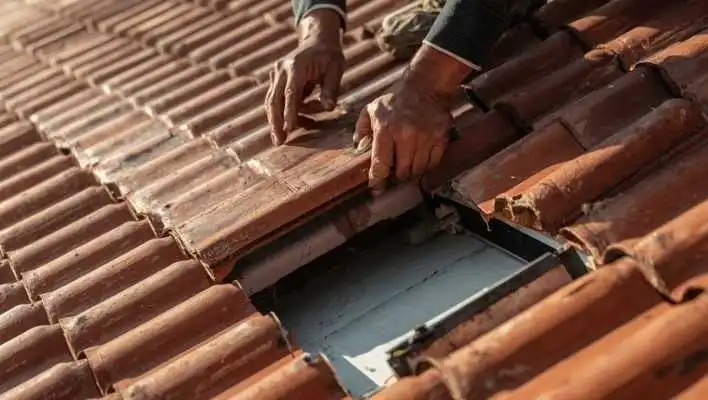
Pro Tip: If your tile roof is more than 15 years old, the underlayment has likely reached the end of its effective lifespan, regardless of how good the tiles look on the surface. Schedule an underlayment evaluation before monsoon season.
Point 3 — Are flat roof seams separating before monsoon rains?
Commercial facilities and modern residential properties with flat or low-slope sections using TPO, PVC, or EPDM membranes face specific risks from Arizona’s extreme heat cycle. Intense summer temperatures cause heat-welded membrane seams to expand, contract, and eventually experience delamination and cracking.
A proper flat roof inspection identifies separating seams, shrinkage cracks, and areas where the membrane has pulled away from perimeter flashings. Technicians also verify that tapered insulation is correctly installed to ensure efficient water flow toward drains. Without proper drainage, ponding water creates heavy dead weight that causes the building deck to sag and allows moisture to penetrate deep into the structural layers below.
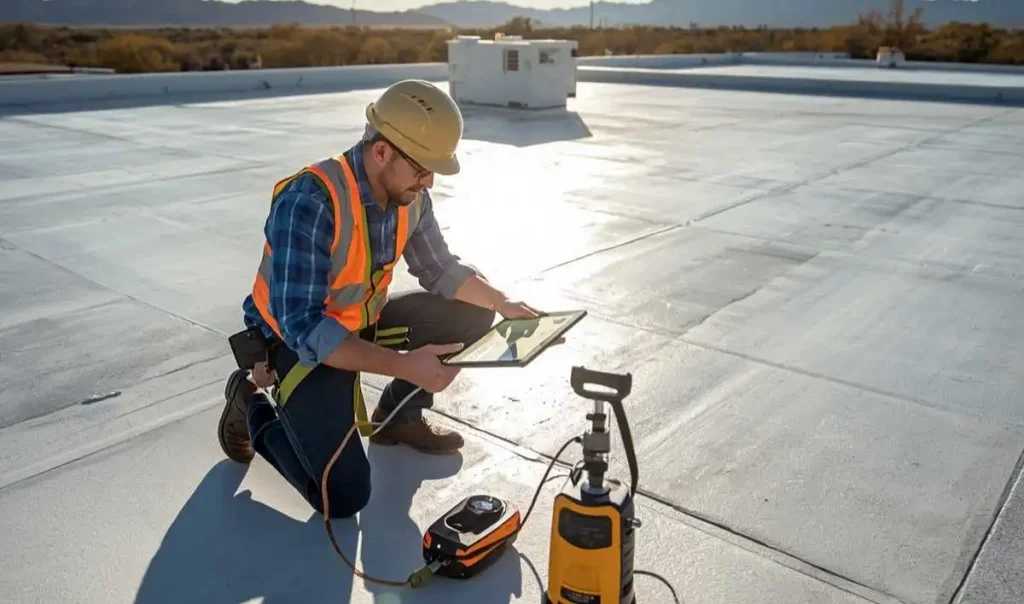
Pro Tip: After any heavy rainstorm, check your flat roof surface within 48 hours. If standing water remains more than 48 hours after rainfall ends, your drainage system has a blockage or incorrect slope — both require immediate attention before monsoon season.
Point 4 — What hidden damage does desert heat cause around roof penetrations?
The most common sources of active leaks in Chino Valley properties are not damaged shingles or cracked tiles — they are the small transition zones around plumbing boots, chimney crickets, and perimeter flashings.
Extreme high-desert heat dries out the specialized sealants applied around roof penetrations. Rubber boots around plumbing pipes and caulking around chimney flashings become hard, brittle, and split open under continuous thermal exposure. These tiny entry points allow water to drip directly into attic spaces along the piping, causing some of the most destructive hidden leaks because damage spreads far from the original entry point.
The daily temperature variation in Yavapai County is also extreme — a single day can shift more than 40 degrees between noon and midnight. This continuous thermal expansion and contraction pulls perimeter metal components, flashing joints, and wall transitions away from the main structure over time. Consulting a roof waterproofing specialist ensures all flashing components remain completely weather-tight before the storm season begins.
Pro Tip: Visually check chimney flashing and plumbing boot collars from the ground using binoculars. Any visible cracking, separation, or rust staining around these zones means the sealant has failed and needs immediate resealing before the monsoon arrives.
Point 5 — Is debris blocking your valleys and gutters?
Strong desert winds carry dust, pine needles, and organic material across rural ranch properties and residential neighborhoods throughout the region. This debris collects in roof valleys, wall transitions, and gutter channels.
When a heavy monsoon storm arrives, trapped debris slows drainage and creates standing water pools that force moisture sideways under shingle edges and against wooden fascia boards. Blocked gutter systems act like a dam, backing water up behind flashings and into the lower roof layers. Regular roof maintenance that includes valley and gutter clearing before the monsoon season prevents this type of localized water damage from developing.
Pro Tip: Clear your gutters and visible roof valleys at least once in May before storm season begins. If you have large trees near your property, a second clearing in early June is worth the effort.
Point 6 — What do attic conditions reveal about roof health?
A complete pre-monsoon assessment must include an interior attic evaluation. What happens beneath the roof deck provides final confirmation of the system’s true health — and you do not always need to climb onto the roof to find critical warning signs.
When water passes through outer shingles or tiles, it saturates the structural wood decking in a condition known as substrate saturation. Saturated insulation traps moisture directly against wood rafters for weeks, triggering dry rot, weakening structural framing, and creating ideal conditions for toxic black mold growth that damages indoor air quality.
Proper attic ventilation is equally critical. When hot air cannot escape through balanced ridge vents and soffit vents, summer attic temperatures can exceed 65°C (150°F). This trapped heat radiates into living spaces, increases air conditioning costs, and bakes roofing materials from the inside out — accelerating adhesive failure and shingle degradation across the entire system.
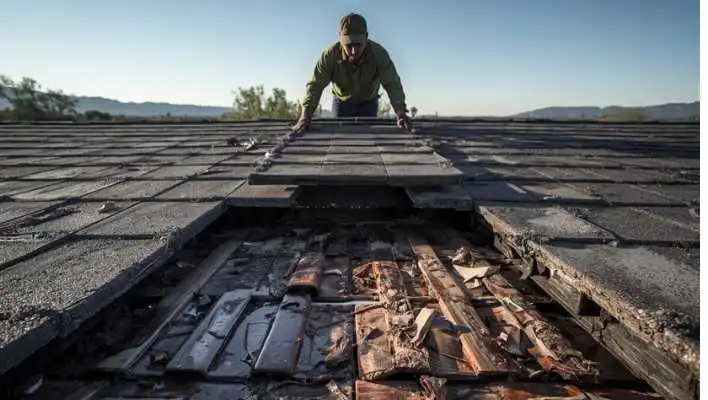
Pro Tip: After a heavy monsoon storm, safely access your attic space and turn off your flashlight for 30 seconds. If you see any pinpoints of daylight shining through the deck boards, you have an active entry point that needs immediate professional sealing.
Point 7 — Do commercial and multi-family properties need a different approach?
Large commercial complexes, industrial facilities, and multi-family apartment communities have risk profiles that differ significantly from standalone residential homes. These larger systems demand an understanding of structural load distribution, drainage engineering, and specific local building regulations.
Multi-family roofing systems feature complex designs with numerous valleys, shared drainage networks, and common walls. High foot traffic from maintenance crews servicing HVAC units or solar installations can cause hidden mechanical damage to surface materials. A proper commercial roofing assessment evaluates shared gutter networks, common firewalls, and party walls where debris frequently accumulates.
New commercial construction in Yavapai County requires custom thermal calculations to prevent early weather degradation. Large low-slope surfaces exposed to uninterrupted solar radiation experience rapid expansion stress if the insulation layout or membrane type is not correctly calibrated for the region’s extreme temperature swings.
| Roof Zone | Inspected Component | Primary Weather Threat | Common Failure Indicator |
|---|---|---|---|
| Surface Layer | Asphalt Shingle Mats | High-Altitude UV Radiation | Alligator Cracking, Granule Loss |
| Surface Layer | Clay & Concrete Tiles | Wind Lift & Heavy Hail | Tile Slippage, Fastener Fatigue |
| Low-Slope / Flat | TPO / EPDM Membranes | Ponding Water & Solar Baking | Seam Separation, Sagging |
| Penetrations | Plumbing Vent Boots | Extreme Desert Heat | Cracked Rubber, Dried Caulk |
| Drainage Zone | Valleys & Gutter Lines | Dust Storm Debris | Standing Pools, Water Infiltration |
| Interior Space | Roof Decking & Rafters | Substrate Saturation | Dry Rot, Wood Softening, Mold |
Frequently Asked Questions
When should I get a roof inspection before the monsoon season in Arizona?
The ideal time is late April to mid-May. Scheduling your roof inspection during this window gives you enough time to complete any necessary repairs before heavy rains arrive in June. It also ensures you get access to qualified professionals before emergency demand fills their schedules completely.
How much does a pre-monsoon roof inspection cost in Chino Valley, AZ?
A standard residential inspection typically ranges from $100 to $300, depending on property size and roof complexity. Commercial assessments for larger facilities generally range from $300 to $500. This minor investment provides a detailed health report and saves thousands in potential interior water damage costs.
Does homeowners’ insurance cover monsoon roof damage in Arizona?
Most standard homeowners’ insurance policies cover sudden storm damage caused by wind, hail, and monsoon events. However, damage resulting from neglect or lack of maintenance is typically excluded. A documented pre-storm inspection report establishes your roof’s pre-damage condition, making the claims process faster and significantly reducing the risk of denial.
How long does a pre-monsoon roof inspection take?
A standard residential inspection takes between one and two hours. Larger commercial properties or complex multi-level structures may require three to four hours for a thorough assessment. A detailed digital report with photographic evidence is typically provided within 24 hours of the completed inspection.
Can a single shifted tile cause a roof leak during a monsoon?
Yes. A single slipped or broken tile exposes the hidden secondary moisture barrier directly to solar radiation and heavy rain. If the underlayment has experienced heat aging or dry rot beneath that tile, water will find a path into the home structure quickly — often dripping far from the original entry point.
How does high desert heat affect commercial flat roofs before the monsoon?
Extreme desert heat causes thermal expansion along TPO and EPDM membrane seams throughout the summer. This constant movement causes heat-welded seams to crack and split open before monsoon rains arrive. Regular pre-season roof waterproofing and seam inspections prevent moisture from saturating underlying insulation boards during heavy storm events.
What are the signs of attic moisture damage before the monsoon season?
Key warning signs include dark water stains on attic wood framing, a musty or damp odor when entering the attic space, visibly sagging insulation, and soft or discolored deck boards. Any of these conditions indicates active moisture intrusion that needs professional repair before monsoon storms accelerate the damage further.
Schedule Your Pre-Monsoon Roof Inspection Today
If you notice curled shingles, cracked tile edges, or stained ceiling spots before monsoon season, taking action now is far less expensive than dealing with active interior damage during a storm. Our team provides thorough pre-storm assessments for residential and commercial properties across Chino Valley, Prescott, Prescott Valley, and all of Yavapai County.
If your property is in any of our core service areas, we’re ready to help:
- Chino Valley
- Prescott
- Prescott Valley
- All surrounding Yavapai County communities
Don’t wait for emergency slots to fill up or for hidden leaks to compromise your structure. If you suspect storm vulnerabilities or need an immediate pre-season roof inspection, contact our team today to schedule a visit.